Your Cart is Empty

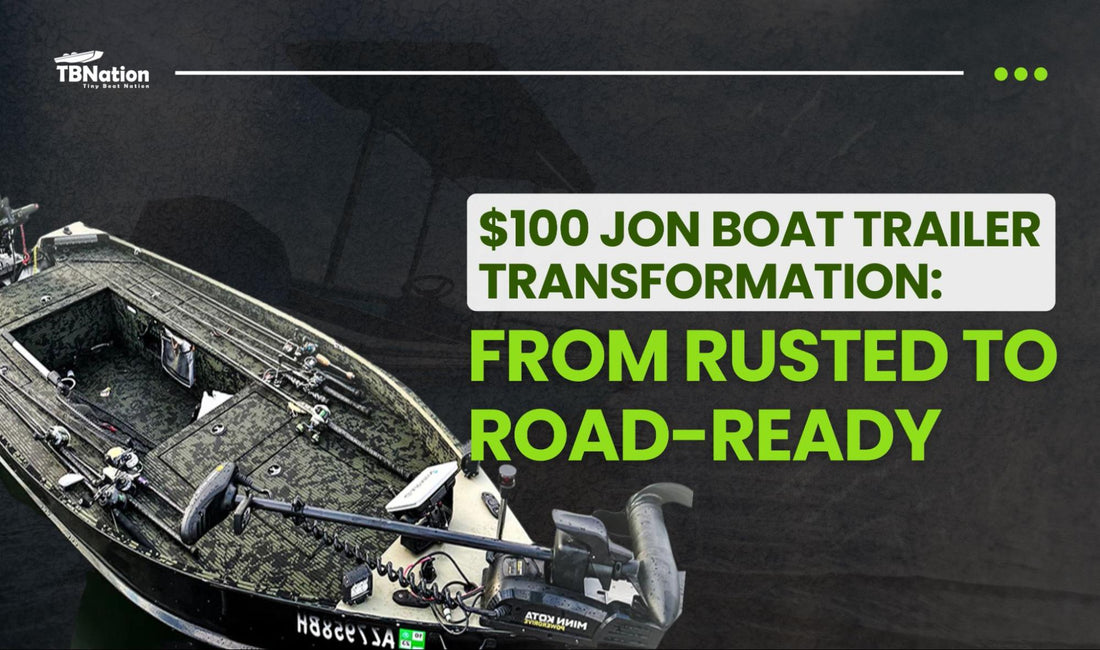
Turning old, forgotten equipment into something reliable is one of the most satisfying parts of owning a Jon boat. Known for their simplicity and rugged design, Jon boat builds are practical, affordable, and easy to customize. However, even the best boat becomes a problem if you don’t have a dependable way to transport it. That’s where this $100 Jon boat trailer transformation comes in.
This article walks through a complete, budget-friendly restoration of a rusted trailer and shows how it can be rebuilt into a safe, road-ready setup. Whether you are in the middle of a jon boat build, browsing listings for a Jon boat for sale, or simply trying to upgrade your existing setup without overspending, this guide provides a clear, realistic path forward.
A Jon boat is often chosen because it keeps boating affordable. Unfortunately, new trailers can easily cost more than the boat itself. For many owners, that expense doesn’t make sense, especially when older trailers are widely available at low prices.
A used boat trailer may look rough at first glance, but appearance can be deceiving. Many rusted trailers still have solid frames and usable components. With the right approach and access to common boat trailer parts, restoring one can cost a fraction of buying new. Even better, a restored trailer can be customized specifically for your Jon boat rather than forcing the boat to fit a generic design.
Once the trailer passes inspection, the first real step is disassembly. Removing old bunks, rollers, wiring, and hardware gives you a clean slate. This process helps you identify weak areas and prepares the frame for restoration.
Stripping everything down also makes it easier to plan how the trailer will support your Jon boat. Flat-bottom boats require proper alignment and even support, which is difficult to achieve without starting fresh.
Rust is the biggest visual problem with older trailers, but it’s also one of the easiest to address.
Using wire brushes, grinders, or sanding discs, loose rust and flaking paint can be removed. The goal is to expose solid metal and create a surface that new coatings can bond to.
After cleaning, applying a rust converter helps stop corrosion from spreading. Once treated, the frame can be painted with a durable, weather-resistant coating. This step not only improves appearance but also extends the life of the trailer.

The trailer is introduced, purchased, and fully evaluated. All worn components, bunks, brackets, wiring, lights, hitch, jack, winch, and tires, are identified for removal while confirming the frame and bearings are still in good shape.

All old accessories are removed and the trailer is sanded with 80-grit to eliminate surface rust and smooth rough galvanizing in preparation for fabrication and paint.

Steel steps are built and welded onto the fenders, followed by fabrication of a full-length front walkway using angle steel and a 2×12 board. Brackets, supports, and bump stop framing are also welded during this phase.

The entire trailer and wooden walkway are painted using Rustoleum Professional flat black. The walkway receives a heavy brushed coat first, followed by sprayed coats for durability and appearance.

New wiring is run through the trailer frame, LED lights and fender markers are installed, and special attention is given to proper grounding using bare metal contact and dielectric grease with marine-grade heat-shrink connectors.

Bump stops, bunk boards with Gatorbak covers, hydro turf on the walkway, retractable transom straps, and final hardware are installed. The boat is loaded, aligned, and the finished trailer is reviewed as part of the duck boat project wrap-up.
Most Jon boat owners prefer carpeted bunks. Made from treated lumber and marine carpet, bunks provide even support and protect the hull. Proper spacing and alignment make loading and unloading much easier.
The winch stand should align with the bow eye of the Jon boat. Adjusting its height and distance ensures the boat loads securely and stays in place during transport.
Correct tongue weight is critical for safe towing. Adjusting axle placement or bunk position helps eliminate trailer sway and improves handling on the road.
Lighting is not just about visibility; it’s about safety and legality.
Modern LED lights are waterproof, bright, and long-lasting. Installing new wiring and lights eliminates common electrical problems and reduces maintenance over time.
Routing wires away from sharp edges and securing them properly prevents damage. Good grounding ensures consistent performance and avoids flickering lights.

As your jon boat build progresses, the trailer should evolve with it. Adding decking, storage compartments, or a trolling motor changes weight distribution. A custom trailer allows you to make adjustments as needed.
If you purchased a used boat from a Jon boat for sale listing, pairing it with a restored trailer increases both functionality and value. A well-matched boat-and-trailer setup is more appealing to buyers and more enjoyable for everyday use.
The finished trailer looks dramatically different from its rusted beginnings. More importantly, it performs reliably. The boat loads smoothly, tows straight, and inspires confidence on long drives.
This transformation proves that a budget build doesn’t mean cutting corners. With careful planning and the right boat trailer parts, an old trailer can become a dependable tool that matches the rugged simplicity of a Jon boat.
A $100 Jon boat trailer transformation shows what’s possible with determination, basic tools, and smart use of affordable boat trailer parts. Whether you’re deep into a jon boat build, upgrading a used rig, or preparing a setup from a Jon boat for sale listing, restoring a trailer is one of the most valuable improvements you can make.
In the end, the transformation isn’t just about saving money. It’s about building something reliable with your own hands and enjoying the confidence that comes with knowing your Jon boat is truly road-ready.
Yes. Restoring a used jon boat trailer often costs far less than buying new, especially when the frame is solid. With affordable boat trailer parts, you can build a safe, reliable setup tailored specifically to your Jon boat.
Start with the frame, axle, and suspension. Surface rust is normal, but deep structural rust is a red flag. Bearings, hubs, and tires should also be inspected or replaced to ensure safe towing.
Costs vary, but many restorations can be completed for a few hundred dollars or less, depending on how many components can be reused. Safety items like bearings, lights, and tires should always be prioritized.
Most jon boat owners prefer bunks. Properly spaced carpeted bunks provide even support for flat-bottom hulls and make loading and unloading easier.
Basic hand tools, a grinder or sander, and a drill are enough for most of the work. Welding is helpful for custom upgrades but not required for every jon boat trailer rebuild.