Your Cart is Empty

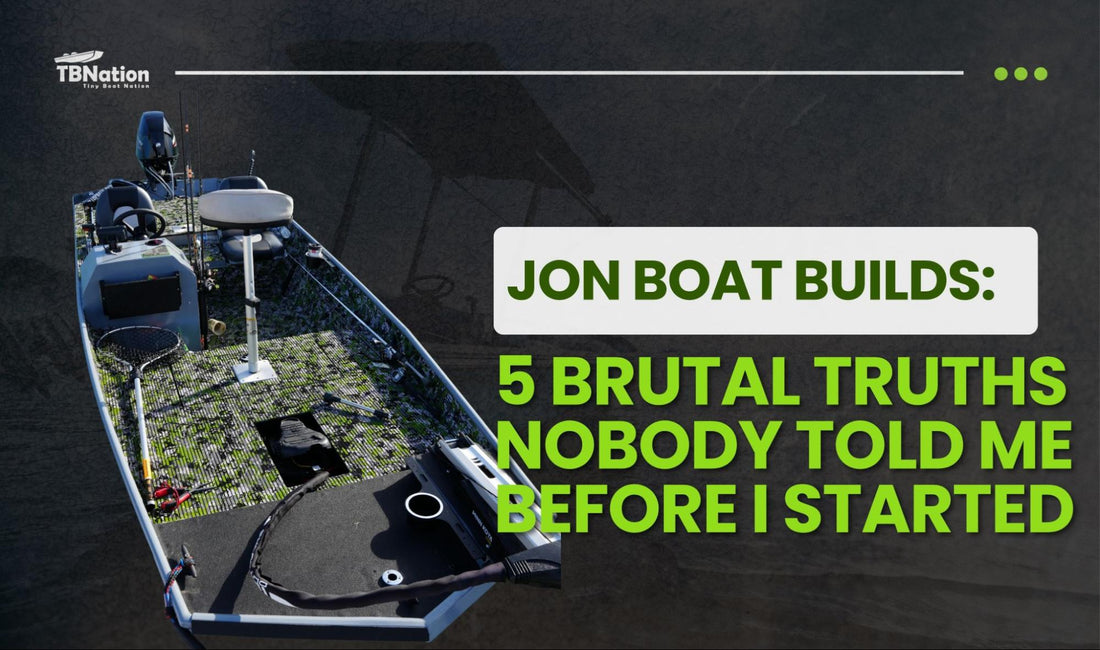
When I decided to build a small fishing boat, I thought it would be a quick weekend project. Online tutorials made it look simple, just grab some plywood, attach a motor, and you’re off to the lake. But reality hit hard. A Jon Boat build is far more complex than it appears and requires patience, precision, and problem-solving.
If you’re new to boating, a Jon Boat is a lightweight, flat-bottomed vessel perfect for shallow waters and calm lakes. Its simple design attracts DIY builders, but that simplicity can be deceiving. Whether you’re crafting one from scratch or modifying an aluminum model, there are lessons that only experience can teach.
A Jon Boat is known for its flat-bottom design, which makes it ideal for shallow waters and calm lakes. Its lightweight construction allows easy transport and simple handling, making it a favorite among anglers and DIY builders. Despite its simplicity, building or customizing one requires careful planning to ensure stability and performance.
At first glance, it seems like one of the easiest boats to build, flat bottom, square bow, and no complex curves, but once you start, you realize how much precision it really takes. Every inch of your design affects performance on the water, and while sealing and waterproofing are crucial for wooden Jon Boat builds, aluminum Jon Boat projects come with challenges like rivets, welding, and corrosion control. Even small mistakes in balance or structure can ruin stability, so patience and careful planning are worth far more than speed.
What begins as a simple Jon Boat build often turns into an expensive passion project once you discover creative Jon Boat build ideas like raised decks, storage hatches, or LED lighting. Costs rise quickly with materials, epoxy, aluminum framing, and Jon Boat accessories such as trolling motors and fish finders. Set a realistic budget, then add a little extra for the inevitable upgrades you’ll want as your project evolves.
The Jon Boat’s flat bottom makes it perfect for shallow water but unstable in waves or wind, especially after adding heavy decks or batteries. For a safer Jon Boat build, keep weight low and centered, avoid overloading the front, and choose a wider-beam hull for better balance. Sometimes, the simplest layout offers the best mix of stability and performance on the water.
Skipping detailed planning is a mistake many first-time builders make. I started cutting wood before deciding where wiring would go, where the battery would sit, or how to reinforce the transom, and ended up redoing several sections. Whether you’re doing a wooden or aluminum Jon Boat build, sketch your layout first, plan for wiring, storage, and weight distribution, and make sure the hull can handle all your accessories. Every piece needs to fit perfectly before you start assembling to avoid wasted time and materials.
Once you launch, the upgrades begin. After my first fishing trip, I immediately started planning improvements like better seats, a more organized deck, improved wiring, and new rod holders. A Jon Boat build is never truly finished, there’s always a new accessory or layout idea to try. Over time, your boat evolves into a custom fishing machine, and each outing gives you inspiration to refine and improve it even further.
Before diving into the actual build, it’s important to understand that may look simple, but even experienced DIYers face unexpected challenges. From weight distribution to material choices, each decision affects performance, safety, and durability.
Whether you’re working with wood or aluminum, each material comes with its own set of challenges. Wood is easier for shaping and joining but requires careful sealing and maintenance. Aluminum is durable and lightweight but demands welding skills, rivets, and corrosion prevention.
A flat-bottom design makes it stable in calm waters but tricky in rough conditions. Improper weight distribution, heavy batteries, or added decks can make it “tippy” or difficult to handle. Planning where everything goes, from motor to storage, is essential for a safe and functional build.
Many first-time builders underestimate how quickly costs can rise. Jon Boat build ideas like raised decks, live wells, or trolling motors may seem optional at first, but they can quickly increase the overall budget. Setting a realistic plan with a buffer for unexpected expenses keeps the project from turning into a financial headache.
Even with a clear plan, building takes longer than most people expect. Rushing can lead to leaks, weak joints, or misaligned components. Patience and careful execution are key; testing, sanding, and sealing every section ensures a boat that’s safe and enjoyable on the water.

Picking the correct engine is crucial for both performance and safety. Too small, and your boat will struggle; too large, and it may become unstable. Consider the size of your boat, typical water conditions, and the type of fishing or activities you plan to do.
One brutal truth often missed is that shipping specialized boat parts isn't as simple as a standard package. Adding this section clarifies why shipping costs vary and sets realistic expectations for delivery timelines.
As builders upgrade to high-ticket electric outboards, they face a steep learning curve regarding shaft positioning and power management.
Even on calm lakes, safety should always come first. Life jackets, a first-aid kit, and basic signaling devices can make a huge difference in emergencies. Preparing for the unexpected ensures that your fishing trips stay fun and worry-free.
If you’ve ever wondered what a Jon Boat is and whether you can build one yourself, the answer is yes, and you should. A Jon Boat build combines craftsmanship, creativity, and personal satisfaction, but it also tests patience and persistence. Your ideas will evolve, costs may rise, and the project will take longer than expected, yet every hour invested results in a boat that reflects your effort and style.
Whether you’re building a simple fishing skiff or converting an aluminum Jon Boat into a full Jon Boat bass boat build, embrace the process. Plan carefully, build slowly, and enjoy refining each detail. Launching your boat and seeing it glide across the water makes all the challenges worthwhile, giving you a uniquely personal creation no store-bought boat can match.
A Jon Boat is a lightweight, flat-bottomed fishing boat designed for shallow waters and calm lakes, and its simple design attracts DIY builders, though building one safely requires planning and precision.
Both materials work: a wooden one is easier for beginners and simple to customize, while an aluminum one is durable and lightweight but requires welding, rivets, and corrosion prevention skills.
The cost depends on materials and accessories; a basic Jon Boat build can be budget-friendly, but adding features like trolling motors, raised decks, or storage hatches can increase the overall expense.
Common mistakes include poor weight distribution, insufficient sealing or welding, skipping detailed planning, and underestimating the time and budget required for a DIY.
To maintain stability, keep weight low and centered, avoid overloading one side, and plan accessory placement carefully, especially with a flat-bottom design that performs best in calm waters.