Your Cart is Empty

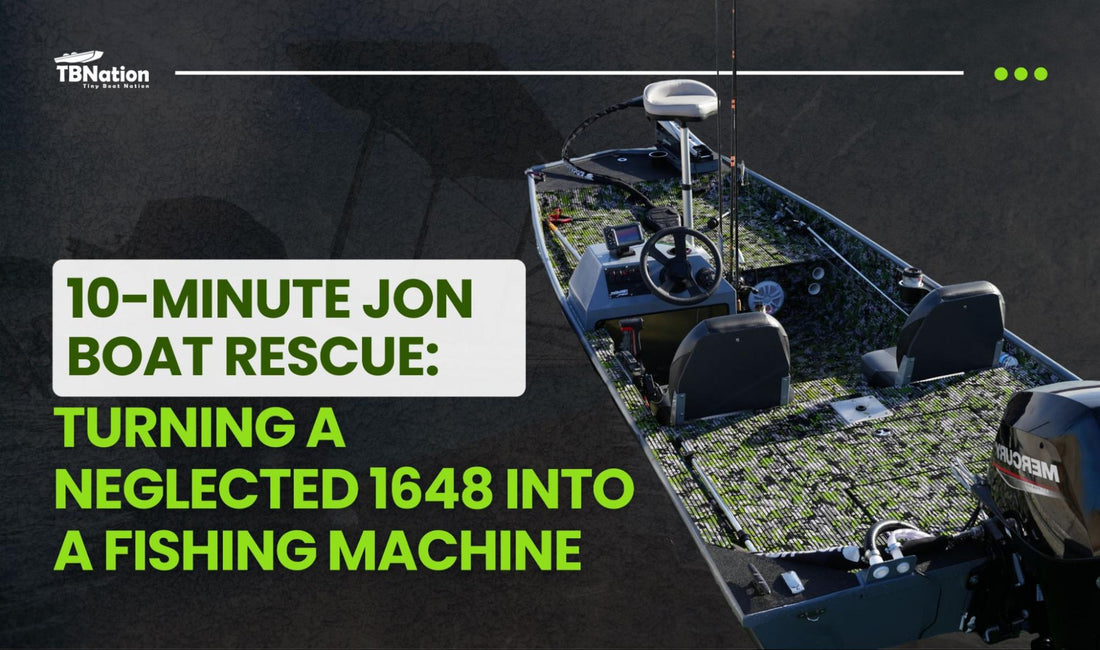
A forgotten aluminum boat sitting in a backyard may not look like much, but to the right person, it represents opportunity. A Jon boat is one of the most adaptable and forgiving fishing platforms ever made, and with minimal effort, even a neglected hull can be transformed into something reliable and exciting. The idea behind a 10-Minute Jon Boat Rescue is simple: focus on what truly matters, restore function first, and unlock the potential hiding beneath years of neglect.
This article explores how a worn-down 1648 Jon boat can be quickly revived and gradually upgraded into a capable fishing machine, using smart decisions, efficient repairs, and proven Jon boat build principles.
The strength of a Jon boat lies in its simplicity. Flat-bottom aluminum construction, open layouts, and minimal factory components make these boats easy to inspect, repair, and customize. Unlike fiberglass boats that can crack or delaminate, aluminum Jon boats tend to survive years of neglect with only cosmetic damage.
This durability is why so many anglers actively search for a used Jon boat for sale. Even boats that appear rough often have solid hulls and can be brought back to life with basic tools and materials.
The 1648 Jon boat has earned its reputation as one of the most balanced sizes available. At 16 feet long and 48 inches wide, it offers excellent stability without becoming heavy or difficult to maneuver. It’s large enough to support multiple anglers, gear, and upgrades, yet still shallow-draft and easy to launch in small bodies of water.
Many Jon boats are abandoned not because they are unusable, but because their owners move on. Some upgrade to larger boats, others stop fishing, and many simply run out of time. As a result, you’ll often find a Jon boat for sale sitting unused for years, quietly deteriorating while still structurally sound.
Online marketplaces, local listings, and word of mouth are common places to find these hidden opportunities.
When evaluating a project boat, looks should be the last concern. Focus instead on the elements that determine safety and longevity:
Minor dents, scratches, and faded aluminum are normal and easily addressed. A solid hull is what turns a cheap purchase into a successful Jon boat build.
The core idea behind a fast rescue is prioritization. Instead of planning a full rebuild immediately, the focus is on getting the boat water-ready as quickly as possible. Many Jon boats don’t need major work to float safely again.
In many cases, a short session of focused effort is enough to turn a forgotten hull into a usable boat.
Once the boat is functional, upgrades can happen at any pace. A smart Jon boat build doesn’t try to do everything at once. Instead, it evolves based on how the boat is used. Many anglers begin with comfort and organization before moving on to larger structural changes.

Remove all old wood, foam, flooring, and hardware to expose the aluminum hull and inspect for damage.

Cut out the old plywood transom, repair pitting and corrosion, and prepare the hull for an aluminum transom.

Add an aluminum subfloor and structural framing with no foam underneath to prevent future water retention.

Pour flotation foam into key compartments and install storage areas and aluminum hatches.

Install a rotary steering system, run cables and wiring, and mount batteries and accessories.

Paint the hull, install EVA foam flooring, mount motors, and test the boat on the water.
Motor choice plays a huge role in how the boat performs. Depending on fishing style and water type, common setups include:
Adding a battery system allows for navigation lights, fish finders, and accessories. Even a simple electrical setup elevates the boat’s capability and usability.
These upgrades move the project beyond a basic hull and firmly into fishing machine territory.
A Jon boat doesn’t need luxury features to be effective. Thoughtful additions designed around fishing performance often outperform larger boats.
Popular upgrades include rod holders, anchor systems, non-slip flooring, and efficient gear storage. Each improvement serves a clear purpose: maximizing time spent fishing instead of managing equipment.
Even with upgrades, the best Jon boat build remains simple. Fewer systems mean fewer failures, easier maintenance, and more time on the water. This simplicity is why Jon boats remain a favorite among serious anglers.

Compared to buying new, restoring a used Jon boat for sale is one of the most affordable ways to get on the water. Many complete builds cost less than a single repair on a larger boat.
Every Jon boat built reflects its owner’s fishing style. Some prioritize stealth and shallow access, while others focus on storage and comfort. There is no one-size-fits-all approach.
Fishing from a boat you rescued and rebuilt creates a deeper connection to the experience. Every upgrade, every fish caught, and every trip carries a sense of accomplishment.
A neglected aluminum hull doesn’t mark the end of a boat’s life, it marks a new beginning. The 10-Minute Jon Boat Rescue philosophy proves that with focus and effort, even a forgotten 1648 Jon boat can be quickly revived and gradually transformed into a reliable fishing machine.
If you’re considering a Jon boat for sale or already own one that’s been sitting unused, remember this: Jon boats are built to last. With the right approach, your next great fishing platform may already be waiting for you.
A Jon boat’s flat-bottom aluminum design, minimal components, and proven durability make it easy to inspect, repair, and customize. Unlike fiberglass boats, aluminum Jon boats often survive years of neglect with only minor issues.
Yes, the 1648 Jon boat is one of the most popular fishing platforms available. Its width provides excellent stability, while its length allows room for gear, casting decks, and multiple anglers without sacrificing shallow-water access.
Focus on hull integrity, rivet condition, seams, and transom strength. Cosmetic damage is common and easily fixed, but structural issues determine whether the Jon boat build will be successful.
Many boats can be made water-ready in under an hour. The “10-Minute Jon Boat Rescue” concept emphasizes prioritizing essential fixes, cleaning, leak sealing, and reinforcement, to restore basic function quickly.
Yes, but most leaks come from loose rivets or seams and are easy to repair with marine sealant, rivet tightening, or small aluminum patches.