Your Cart is Empty


So, you’re knee-deep in a Jon boat conversion. You’ve framed out the decks, you’re eyeing that Double Graph Mount from Nate’s Custom Boats, and now you’re thinking about whether an Electric Outboard is really worth the investment. At Tiny Boat Nation, we’ve rigged everything from 10ft toppers to 1648 jumbos. We don’t just look at the sticker price; we look at the boulders of boat building, performance, weight distribution, and long-term reliability.
If you’re wondering if switching to an electric outboard is a smart investment or just a high-roller luxury, let’s break down the actual math.
Let’s be real: an ePropulsion Spirit 1.0 Plus or a Mercury Avator 7.5e costs more upfront than a used 5HP gas motor. But at TBN, we measure value in WOT (Wide Open Throttle) Runtime.
The biggest hidden cost of gas motors isn’t fuel, it’s the Saturday mornings lost to a gummed-up carburetor.
Traditional gas setups require regular upkeep to stay reliable. Between spark plugs, fuel lines, filters, and seasonal prep, maintenance becomes part of the ownership cost. For many boat owners, that means less time fishing and more time working in the garage. It’s a tradeoff that often gets overlooked when comparing costs.
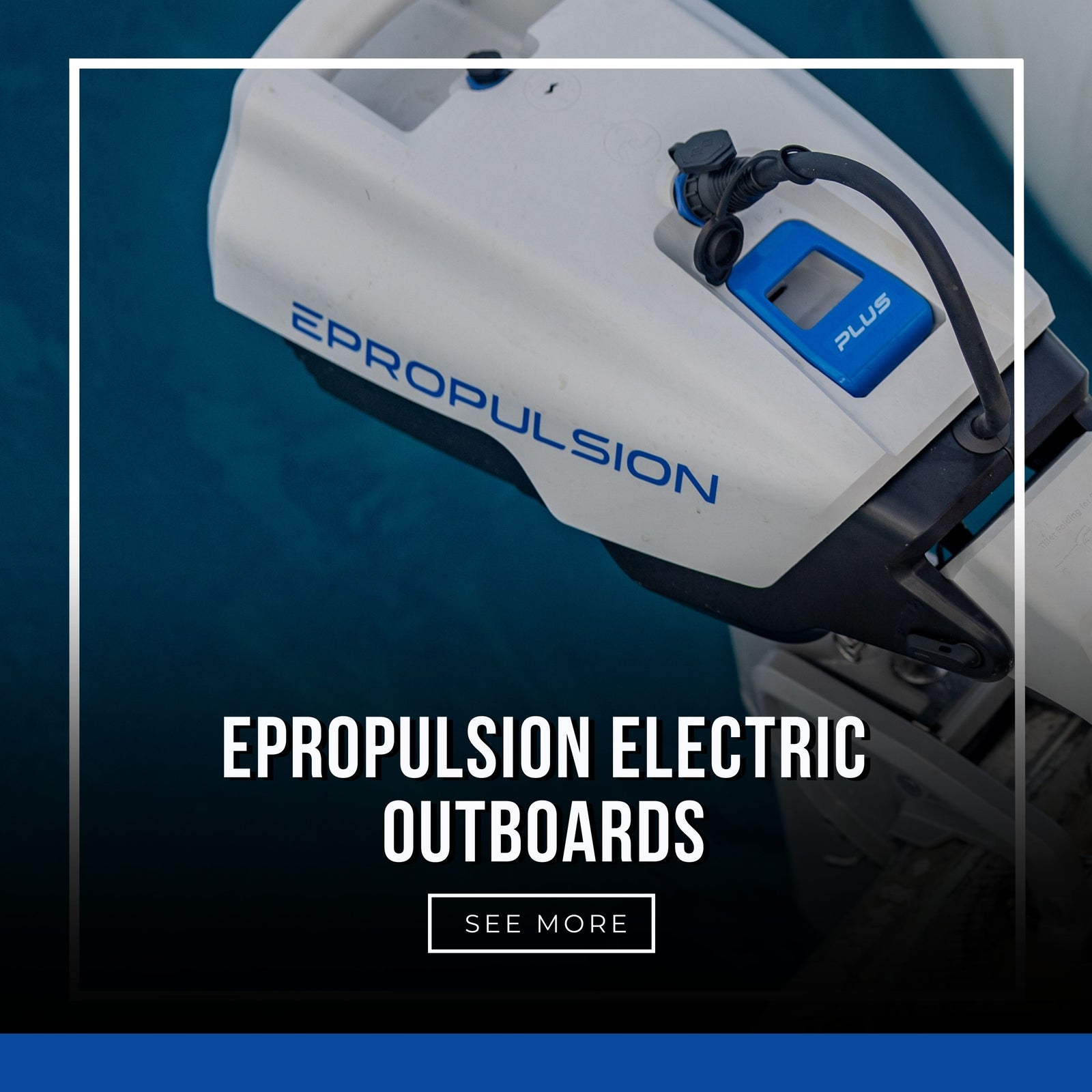
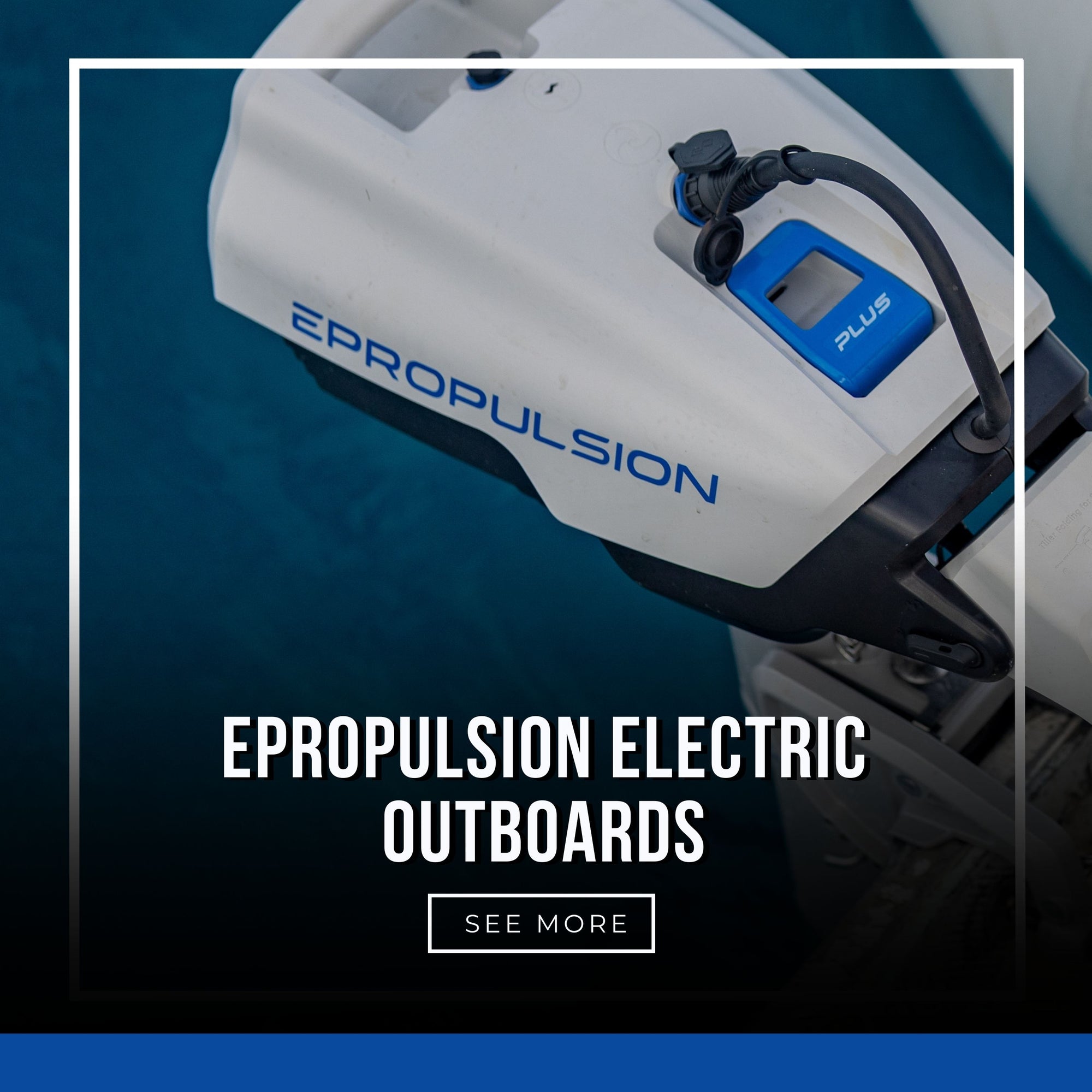
Motors like the ePropulsion Navy or Spirit series are built with brushless, direct-drive systems that simplify ownership. There are no impellers to swap, no oil to change, and no winterization process to worry about. That means fewer moving parts, fewer service headaches, and less downtime overall. For a DIY builder, that kind of simplicity matters.
At Tiny Boat Nation, we look beyond the sticker price and focus on what ownership actually feels like long term. An electric outboard can save you hours of maintenance while giving you a cleaner, more dependable setup. You spend less time chasing “white dust” corrosion and fuel system problems, and more time doing what the boat was built for. For many builders, that alone makes the switch worth considering.
Electricity is predictably cheaper than marine-grade ethanol-free gas, but the real savings come from how you drive.
If you’re still thinking about trolling motor batteries (AGM/Lead-Acid), stop.
A Spirit 1.0 Plus setup weighs about 42 lbs total, while a comparable trolling motor setup with two Group 27 AGM batteries comes in around 128 lbs. That 80 lb difference is a major advantage in a lightweight Jon boat or micro-skiff.
Less weight means better balance, improved efficiency, and quicker performance on the water. In many cases, it’s the difference between popping on a plane and plowing water all day.
ePropulsion batteries are designed to float, which adds an extra layer of confidence on the water. Try getting that kind of peace of mind from a lead-acid brick.
The #1 mistake builders make when buying electric is choosing the wrong shaft length.
If you’re looking for the ultimate cost-to-performance upgrade, the Autoboat GPS SmartHead is worth serious attention. This second-generation tech brings Spot-Lock, or GPS Anchor, to standard transom motors, giving small boat builders a major advantage without adding unnecessary complexity. It matters because it can save you from buying a $2,500 bow-mount trolling motor just to get anchor mode. That means you can keep your deck clean, simplify your setup, and protect your budget at the same time.
Gas prices at the marina are always higher than at the street. In 2026, marine fuel remains volatile, while home electricity rates are predictable.

This is where the TBN philosophy shines. We hate "dead days" on the water caused by mechanical failure.
No oil changes, no fuel filters, no impeller swaps, and no carburetors to gum up from ethanol gas. That means fewer service items to track and less routine maintenance throughout the season. You can spend more weekends on the water instead of in the garage.
You don't need to "fog" an electric motor. Store the battery in a climate-controlled area at 50–60% charge, and you’re done. Offseason prep is as simple as checking the battery charge, saving you time and hassle.
With fewer moving parts, the "will it start?" anxiety is eliminated. Flip a switch, and you have 100% power instantly. That consistent performance gives peace of mind, whether it’s your first ride or your hundredth.
So, is an Electric outboard motor actually worth it for a Jon boat or tiny boat build? In a lot of cases, yes, especially if you care about runtime, simplicity, deck space, weight savings, and fewer maintenance headaches. Once you factor in fuel costs, carb issues, battery weight, and long-term reliability, the value starts to make a lot more sense than the upfront price might suggest.
At Tiny Boat Nation, we don’t just look at what gets your boat moving, we look at what makes your build smarter and more efficient on the water. For many DIY builders, an electric outboard motor isn’t just a luxury upgrade, it’s a cleaner, lighter, and more dependable setup. If your goal is to maximize performance without adding unnecessary complexity, electric is absolutely worth a serious look.
It can be, especially if you use your boat often and want to avoid the long-term costs that come with gas. Lower maintenance, cheaper charging, and better reliability can make up for the higher initial investment over time.
In many cases, yes. Their lighter weight, simpler rigging, and cleaner setup make them a strong fit for Jon boats, micro-skiffs, and other small DIY builds where balance and space matter.
That depends on the setup, but the difference can be significant. Compared to traditional trolling motor systems with AGM batteries, some electric outboard setups can save enough weight to noticeably improve hole shot, balance, and overall hull performance.
Yes, and that’s one of the biggest advantages. With no carburetor, no oil changes, no fuel system issues, and fewer moving parts, electric outboards are much easier to own and maintain.
For some builders, yes. With the right setup and add-ons like GPS anchor technology, an electric outboard can cover propulsion, trolling, and boat positioning without needing multiple motor systems.